
Large anses of Psychod. · Hippolyte Baraduc, 1913 ↗
2023-06-24 · updated 2026-10-04
TurtleChess: Adventures in Chess Engines
Description of a project where I attempt to build a chess engine in Python. Here I discuss the first attempt and the subsequent approaches that I investigated in speeding up the engine
Source code can be found at Github
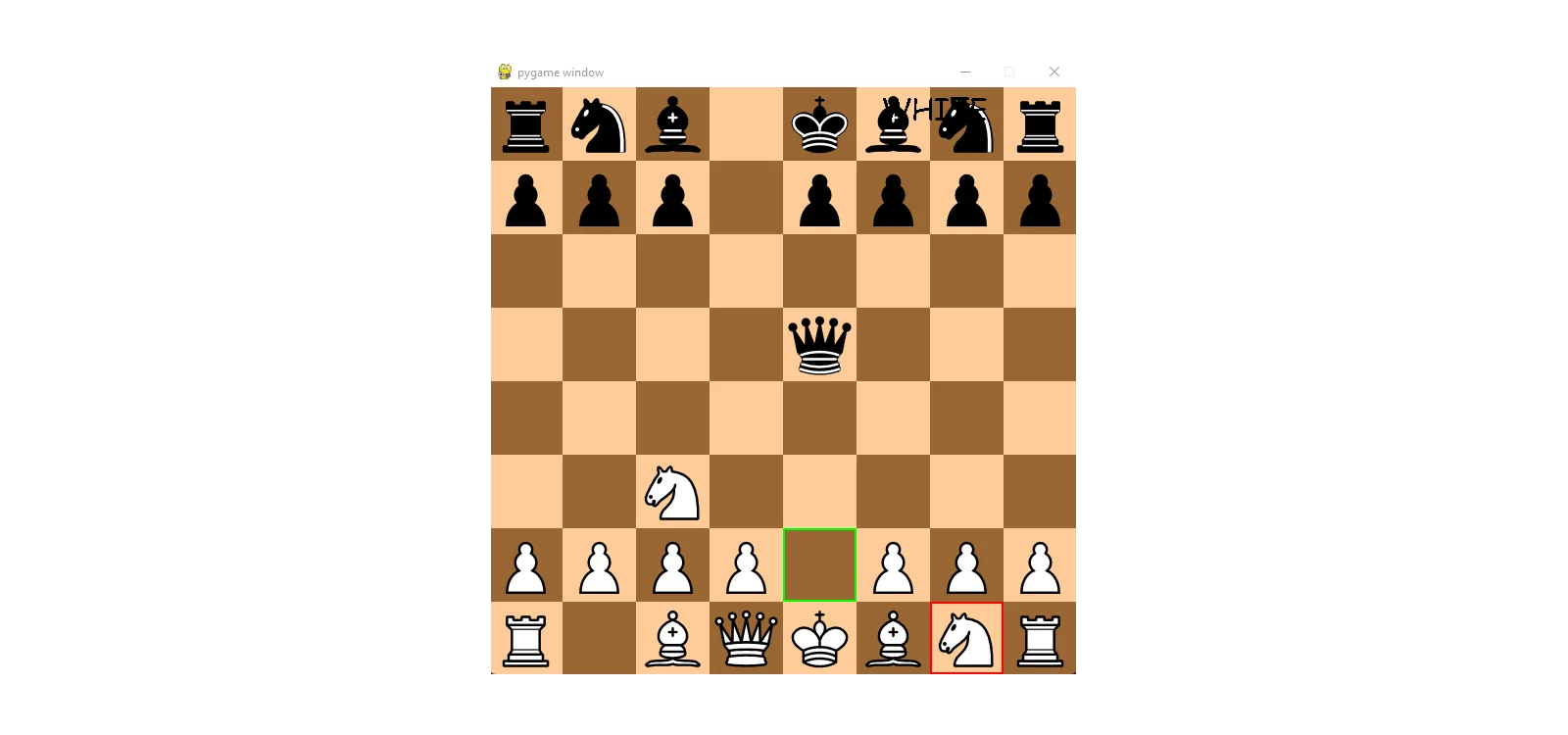
Over my life I have had a bit of fascination with the game of chess. Reinvigorated, over the period of COVID, when there was not a whole lot to do aside from learn more about the game. But looking at the engines, I was intrigued with how chess could be mastered and possibly be solved by a computational algorithm.
When looking to do this for myself I decided to use Python mostly for its ease of use as it was the main language I had learnt up to the stage I started coding the application. As well as this, there is a hope that this engine could easily be integrated with machine learning methods in the future as there are a number of libraries for Python that would make this integration very easy.
In order to display the chess games a GUI is developed using Pygame and elements used to control the game came from the Pygame library.
Lessons in First Implementations
First off, to see how this project went and how my thought process and skills improved we should take a look at how the first ideas in the project panned out.
During the game loop, which is the animation loop in Python, we perform functionality in a turn based system that calculates all valid moves on the board for the current board so that when the user selects two squares via a click then the check for a valid move is quick.
The main portions for this logic occur in the function self.board.init_valid() which introduces a lot of inefficiencies in the code that means that the code is not particularly helpful for use in a chess engine where this function would be called many times within a search tree searching for the best move.
def init_valid(self,color, basic=False):
"""
Update valid moves for all pieces of color
:param color: int
represents color of piece to validate
:param basic: Bool
whether to check if a piece is in check
:return:
"""
for i in self.pieces:
s = i.update_valid_moves(self.pieces)
if not basic:
self.validate_check(color)
First off, we find all valid moves for pieces without checking whether the opposing king is in check. The piece move checking is fairly trivial:
def update_valid_moves(self, board):
"""
Update valid moves
:param board: List[Piece]
list of pieces on current board
:return:
"""
self.valid_moves = []
for i in self.moves:
copy = self.pos[:]
valid = True
once = True
while i[0] + copy[0] >= 0 and i[0] + copy[0] < 8 and i[1] + copy[1] >= 0 and i[1] + copy[1] < 8 and valid:
if valid and not once:
valid = False
for j in board:
if [i[0] + copy[0], i[1] + copy[1]] == j.get_pos() and once:
if j.get_color() == self.get_color():
valid = False
else:
valid = True
once = False
if valid:
self.valid_moves.append([copy[0] + i[0], copy[1] + i[1]])
copy = [copy[0] + i[0], copy[1] + i[1]]
This is run for each instance of the Piece class and iterates for its unit value of its room (e.g. for bishop [[1,1], [-1,-1], [1,-1], [-1,1]]) and then iterates from that point onwards in those directions until encountering another piece. It is important to note that I have left out implementations for knight, pawn and king for brevity but it follows a similar pattern. However, you may notice that we pass a reference to board a list of pieces and as such there is no separation of concerns as this method of Piece makes it unclear where the responsibility lies for piece generation.
The errors also go further on from a conceptual level to more efficiency based errors which are particularly evident in the code for pruning moves that result in checks.
def validate_check(self,color):
"""
Remove moves that result in current coloured King going into check
:param color: int
represents color of piece to validate
:return:
"""
copy_board = deepcopy(self)
pieces = copy_board.pieces[:]
for piece in pieces:
if piece.color[0] == color:
valid_moves = deepcopy(piece.valid_moves)
# 4,5,6
# 4,3,2
if isinstance(piece, King):
bi_castling = [list(range(piece.pos[0],x[3][0], (x[0] - piece.pos[0])//abs(x[0] - piece.pos[0]))) for x in valid_moves if len(x) > 2]
for idx,direction in enumerate(bi_castling):
for position in direction:
original_pos = deepcopy(piece.pos)
copy_board.make_move_pos(original_pos, [position, original_pos[1]])
copy_board.init_valid(color, True)
future_check = copy_board.get_set_check(color)
copy_board.make_move_pos([position, original_pos[1]], original_pos)
copy_board.init_valid(color, True)
if future_check:
for i in self.pieces:
if i.__class__.__name__ == piece.__class__.__name__ and i.color == piece.color and i.pos == piece.pos:
castle_move = [x for x in valid_moves if len(x) > 2]
move = castle_move[idx]
for x in i.valid_moves:
if [x[0],x[1]] == move[:2]:
i.valid_moves.remove(move)
for move in valid_moves:
original_pos = deepcopy(piece.pos)
moved, removed_piece = copy_board.move_piece(piece.pos, move)
if len(move) > 2:
if move[2] == "CASTLING":
status = move[2]
copy_board.init_valid(color, True)
future_check = copy_board.get_set_check(color)
copy_board.reverse_move(move, original_pos, removed_piece)
copy_board.init_valid(color, True)
if future_check:
for i in self.pieces:
if i.__class__.__name__ == piece.__class__.__name__ and i.color == piece.color and i.pos == piece.pos:
if (move in i.valid_moves):
i.valid_moves.remove(move)
There is a lot to unpack here that may take a bit of time, particularly due to a lack of clear comments but generally, we create a deepcopy of the board in order to make each potential move, then for each move we generate valid moves to check whether the king is in check. This is not an efficient way to perform this functionality. First of all, it is unnecessary to deepcopy our board, an expensive operation, as we are simply making and then reversing moves. Next of all, we generate all valid moves in order to determine whether a piece is attacking the king (and so is in check). However this is not necessary as checks can only occur from pieces in line with the king, or at specific positions that can only be reached by specific pieces and so a lot of computation can be pruned by trying to reverse the focus from generating all moves, to generating moves for the King specifically.
I will make a lot of this clearer when we move onto the current implementation.
What will stay on though, will be the general idea of separating game logic, state logic (logic of game starting) and UI. Specifically there are menus present which allow the user to pick the type of game (vs Computer, Player vs Player) and also their colour. This is an example of good logic separation that makes the code somewhat easier to understand.
Moving onto Greener Pastures
With evidence of ill-thought-out design it was time to move onto a new implementation that tries to be essentially less of a naive approach. Beginning with the Game.py entry file, there is a much better separation of logic as well as explicit state management via enums that allow for clear logic. Once again, the crux of the content can be found in our Board.py and its initialisation, Board().initialise_boards() function.
Bitboard Magic
Keeping with the trends in chess engine development, rather than expressing the board as an 8x8 2d array with each square holding a Piece class, we will be making use of bitboards.
Bitboards are useful and make sense for chess engines. This is due to the representation of the board being in a far more efficient manner.
Think about this first, rather than iterating through the rows and then columns of an 8x8 2d array we could iterate through one singular array of length 64 and index using an expression: PieceAtRowCol(r,c) = Board[r*8 + c]. However, these two representations are very similar, just being two areas of contiguous memory. So, why don't we use some other datatype that is capable of storing 64 elements? How about, a 64 bit number. So that each bit set within a number corresponds to a piece? However the representation power of this method is small (we can only store one bit for each cell) so instead we can store multiple bitboards, each corresponding to a certain value.
def initialise_boards(self):
self.piece_bb[Color.WHITE][Piece.PAWN] = np.uint64(0x000000000000FF00)
self.piece_bb[Color.WHITE][Piece.KNIGHT] = np.uint64(0x0000000000000042)
self.piece_bb[Color.WHITE][Piece.BISHOP] = np.uint64(0x0000000000000024)
self.piece_bb[Color.WHITE][Piece.ROOK] = np.uint64(0x0000000000000081)
self.piece_bb[Color.WHITE][Piece.QUEEN] = np.uint64(0x0000000000000008)
self.piece_bb[Color.WHITE][Piece.KING] = np.uint64(0x0000000000000010)
self.piece_bb[Color.BLACK][Piece.PAWN] = np.uint64(0x00FF000000000000)
self.piece_bb[Color.BLACK][Piece.KNIGHT] = np.uint64(0x4200000000000000)
self.piece_bb[Color.BLACK][Piece.BISHOP] = np.uint64(0x2400000000000000)
self.piece_bb[Color.BLACK][Piece.ROOK] = np.uint64(0x8100000000000000)
self.piece_bb[Color.BLACK][Piece.QUEEN] = np.uint64(0x0800000000000000)
self.piece_bb[Color.BLACK][Piece.KING] = np.uint64(0x1000000000000000)
for p in Piece:
for c in Color:
self.color_occ[c] |= self.piece_bb[c][p]
self.occ = self.color_occ[Color.WHITE] | self.color_occ[Color.BLACK]
self.format_board.update_board(self.piece_bb, self.king_in_check)
self.legal_moves = self.find_moves()
self.format_board.update_legal_moves(self.legal_moves)
In this code for example, bitboards for each piece are stored as a matrix so that we can access each piece bitboard by that piece's colour and piece type. Other bitboards are also in use such as the locations of all pieces on the board, and then the locations of pieces in a colour specific manner.
Don't worry though, the trusty array style of piece representation is still present, specifically in the FormattedBoard class which takes in the bitboards and outputs something that can be consumed by our GUI classes present in our first implementation. However, in order to extract piece locations we loop through colours then pieces to get each bitboard. Then we return the indexes of each bit that has been set in the 64 bit number. Essentially this just boils down into some math that allows us to repeatedly remove the least significant bit and get the index of the LSB, until our bitboard is empty (I may write a more in-depth blog about this step). All in all we return a representation of the board that can be used to display our GUI.
Back to logic now and finding our moves in which we introduce a new class MoveGenerator which also uses MoveGenerationTable. Our approach broadly follows our first implementation where we generate, what we now call, pseudo legal moves (moves that are legal without considering checks) and then we check for checks. First of all, let's dive deeper into the MoveGenerationTable in order to understand the power behind bitboards.
Tables?
If we think about the problem, we can begin to see that the moves that each piece can make at a certain position are always constant. It is only the presence of either, other pieces or checks, that result in these moves being removed as valid moves. So rather than computing these moves in the main game loop, we can simply look up these moves in a table that has been precomputed. The general structure of a table for a piece is a 64 long list of 64 bit numbers, each number the possible moves that the piece can make from its index in the list.
Let's take a look at Knights!
def generate_knight_moves(self):
bb = np.zeros(64, dtype=np.uint64)
knight_pos = np.uint64(1)
for i in range(64):
knight_clip_file_a_b = knight_pos & ~self.clear_files[0] & ~self.clear_files[1]
knight_clip_file_a = knight_pos & ~self.clear_files[0]
knight_clip_file_g_h = knight_pos & ~self.clear_files[6] & ~self.clear_files[7]
knight_clip_file_h = knight_pos & ~self.clear_files[7]
wwn = knight_clip_file_a_b << np.uint8(6)
wnn = knight_clip_file_a << np.uint8(15)
een = knight_clip_file_g_h << np.uint8(10)
enn = knight_clip_file_h << np.uint8(17)
ees = knight_clip_file_g_h >> np.uint8(6)
ess = knight_clip_file_h >> np.uint8(15)
wws = knight_clip_file_a_b >> np.uint8(10)
wss = knight_clip_file_a >> np.uint8(17)
bb[i] = wwn | wnn | een | enn | wws | wss | ees | ess
knight_pos = knight_pos << np.uint8(1)
return bb
bb is the list which contains moves from each position. So we check each position in that list. It is important to note that this will not error if we go beyond a certain row or column (only if going before 0 or beyond 2^64) and so we must be rigorous in checking. There are eight possible moves a knight can make.
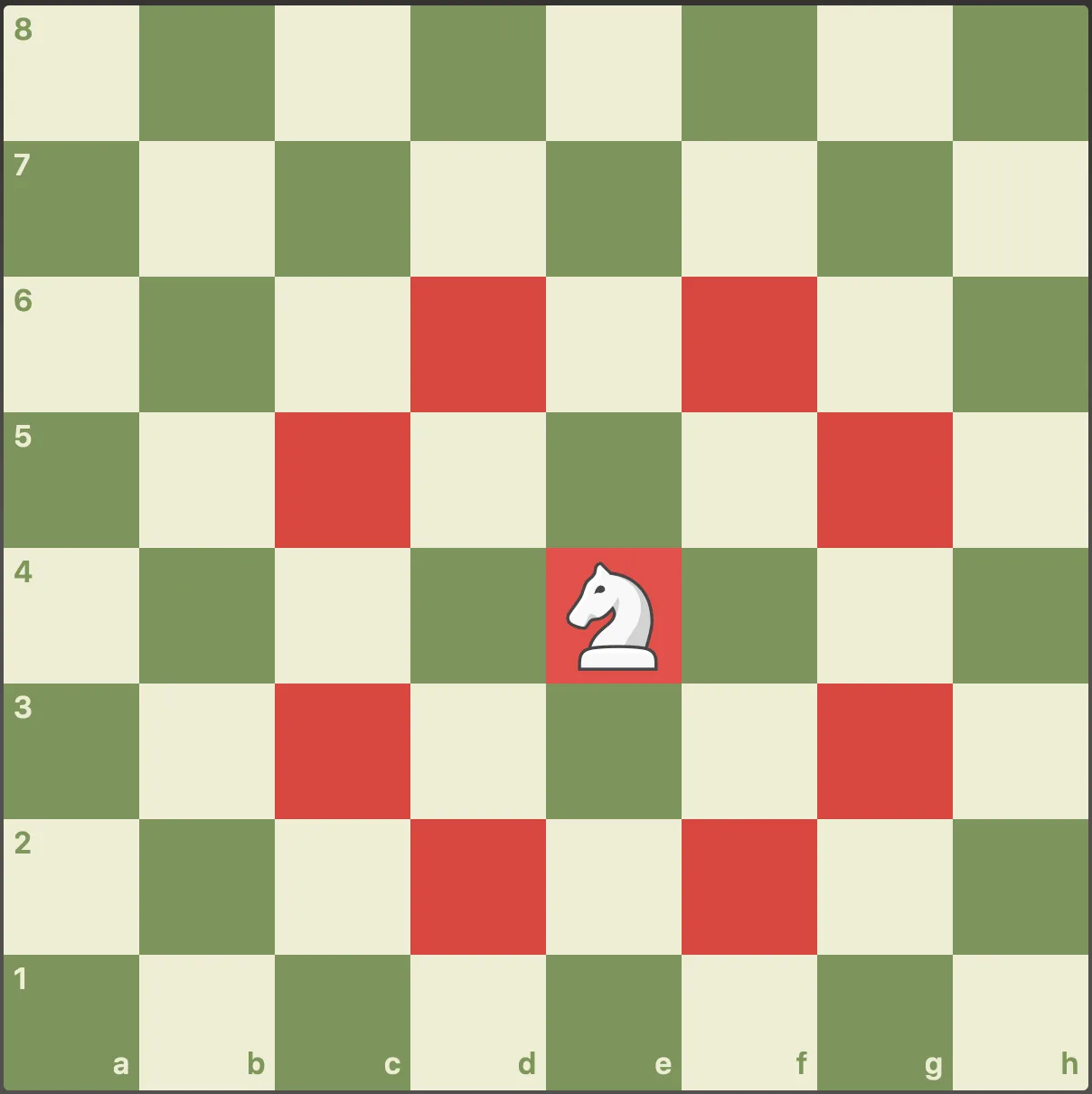
As such, we require clipping when the knight will overflow the row, so for example, we should remove knights on row a when the knight is making moves westwards. As such, we should do a bitwise AND between our knight bitboard and a bitboard that contains 1s from index 8 onwards. So for example if our knight is on row A we would have:
| 0 0 0 0 0 0 0 0 | | 0 1 1 1 1 1 1 1 | | 0 0 0 0 0 0 0 0 |
| 0 0 0 0 0 0 0 0 | | 0 1 1 1 1 1 1 1 | | 0 0 0 0 0 0 0 0 |
| 0 0 0 0 0 0 0 0 | | 0 1 1 1 1 1 1 1 | | 0 0 0 0 0 0 0 0 |
| 0 0 0 0 0 0 0 0 | X | 0 1 1 1 1 1 1 1 | = | 0 0 0 0 0 0 0 0 |
| 1 0 0 0 0 0 0 0 | | 0 1 1 1 1 1 1 1 | | 0 0 0 0 0 0 0 0 |
| 0 0 0 0 0 0 0 0 | | 0 1 1 1 1 1 1 1 | | 0 0 0 0 0 0 0 0 |
| 0 0 0 0 0 0 0 0 | | 0 1 1 1 1 1 1 1 | | 0 0 0 0 0 0 0 0 |
| 0 0 0 0 0 0 0 0 | | 0 1 1 1 1 1 1 1 | | 0 0 0 0 0 0 0 0 |
In the code this is our clear_files array which just stores these bitboards that mask certain files, and the same is done for ranks. As such this allows the removal of knight positions when performing certain moves. Then in order to move the knight position, our clipped knight position is bit shifted to move the set bit into a proper position:
| 0 0 0 0 0 0 0 0 | | 0 0 0 0 0 0 0 0 |
| 0 0 0 0 0 0 0 0 | | 0 0 0 0 0 0 0 0 |
| 0 0 0 0 0 0 0 0 | | 0 0 0 0 0 0 0 0 |
| 0 0 0 0 0 0 0 0 | << 6 = | 0 1 0 0 0 0 0 0 |
| 0 0 0 1 0 0 0 0 | | 0 0 0 0 0 0 0 0 |
| 0 0 0 0 0 0 0 0 | | 0 0 0 0 0 0 0 0 |
| 0 0 0 0 0 0 0 0 | | 0 0 0 0 0 0 0 0 |
| 0 0 0 0 0 0 0 0 | | 0 0 0 0 0 0 0 0 |
| 0 0 0 0 0 0 0 0 | | 0 0 0 0 0 0 0 0 |
| 0 0 0 0 0 0 0 0 | | 0 0 0 0 0 0 0 0 |
| 0 0 0 0 0 0 0 0 | | 0 0 0 0 0 0 0 0 |
| 0 0 0 0 0 0 0 0 | >> 15 = | 0 0 0 0 0 0 0 0 |
| 0 0 0 1 0 0 0 0 | | 0 0 0 0 0 0 0 0 |
| 0 0 0 0 0 0 0 0 | | 0 0 0 0 0 0 0 0 |
| 0 0 0 0 0 0 0 0 | | 0 0 0 0 1 0 0 0 |
| 0 0 0 0 0 0 0 0 | | 0 0 0 0 0 0 0 0 |
These bitshifts result in new positions for our knight that correspond to moves. Each move direction is stored in individual bitboards which are then ORd together to form a final bitboard containing all knight moves for a certain position.
This idea of masking for files and ranks allows us to not only perform clipping for out-of-bounds moves but to also verify pawn ranks.
Generally a similar style is applied for knights, pawns and kings as they can be classed as non-sliding pieces (i.e. their movements are fixed to a certain number of squares by jumping). For pawns, special considerations should be placed onto the ranks where they can shift forwards 2 squares and also the direction of that shift, as the colour is the decider for this decision.
Moving on, bishops, rooks and queens follow a different logic that means we don't fully determine their move set. The non-sliding pieces' moves can be pruned simply by performing AND with free squares and as such is simple. However for sliding pieces, we will have to remove moves that come after a "blocker" and allow the moves in between the mover and the blocker.
Sliding Moves
The general idea is that, we can reduce the problem down to a singular rank. Each sliding piece (aside from the queen but we will get back to that) has two axes of movements. So for rooks this is along the files & ranks and for the bishop this is along the diagonal and anti-diagonal. Each of these directions of movements can be transformed, ideally into a one dimension space, as any other square on the board is irrelevant that is not a part of the possible movement direction. As such there are a possible 256 configurations of occupiers on one rank. Each cell can either be filled or not filled by an attacker. Then our piece can be placed on 8 possible squares.
As such, as part of our precomputation the bits which can be attacked are calculated for each piece position on one rank, and then all the possible configurations of attackers. This can then be used during real-time move generation to look up our possible moves for a certain occupation and piece location.
During move generation for sliding pieces, each direction of movement is mapped onto the first rank through a series of bit operations (which I may dive deeper into in another post). As for the queen, this is essentially just the combination of bishop and rook movements and so we can OR their move sets.
Thus we have effectively now produced legal moves for all of our pieces mostly by precomputation. This is the power of bitboards. We can use masks and bitwise operations in order to efficiently compute new positions simply that would otherwise require iterators and other list based functions that cause too much computation.
Our King is Under Attack!!?
But what about checks? So for this portion we have to iterate through our moves. It is simple if the king is not the piece moving:
def king_is_attacked_without_move(self,board):
king_bb = board.get_piece_bb(Piece.KING)
king_pos = get_occupied_squares(king_bb)
opp_color = ~board.color
if len(king_pos) < 1:
return True
king_pos = king_pos[0]
opp_pawns = board.get_piece_bb(Piece.PAWN, opp_color)
opp_knights = board.get_piece_bb(Piece.KNIGHT, opp_color)
opp_bishops = board.get_piece_bb(Piece.BISHOP, opp_color)
opp_rooks = board.get_piece_bb(Piece.ROOK, opp_color)
opp_queens = board.get_piece_bb(Piece.QUEEN, opp_color)
pawn_check = (self.tables.pawn_moves[board.color][PawnMoveType.ATTACK][king_pos] & opp_pawns) != EMPTY_BB
knight_check = (self.tables.knight_moves[king_pos] & opp_knights) != EMPTY_BB
bishop_check = (self.get_bishop_moves(king_pos, board) & (opp_bishops | opp_queens)) != EMPTY_BB
rook_check = (self.get_rook_moves(king_pos, board) & (opp_rooks | opp_queens)) != EMPTY_BB
return pawn_check | knight_check | bishop_check | rook_check
We simply behave as if the king is an attacking piece (such as a pawn, knight etc.) and check if the attacking piece's moves from the king position match with a matching opponent's piece. If the king is being moved then we have to first of all apply the move and then perform the same action as earlier to check if the king is moving into check.
Castling
Now castling just involves storing castling rights for each colour and then performing the castling if the rights are held and the resulting move is invalid due to checks. Rights are granted when the spaces in between king and rook are freed and removed if either piece moves. Checking for castling just means moving the king onto squares in between castling and then checking for checks. All in all, castling is quite an involved process that results in possibly some inefficiencies and where I would like to improve in the future.
En Passant
En Passant is triggered by masks that indicate the pieces vulnerable to the attack and so a move can be performed if the piece next to a pawn is vulnerable to the attack.
Promotions
Promotions occur when a move is actually being applied on the board and as such maybe the method Board().applyMove() should be introduced:
def make_move(self, move, inplace=True):
if not inplace:
newBoard = Board()
newBoard.pieces = np.copy(self.piece_bb)
newBoard.color_occ = np.copy(self.color_occ)
newBoard.occ = np.copy(self.occ)
newBoard.color = self.color
newBoard.legal_moves = np.copy(self.legal_moves)
else:
newBoard = self
move_exists_in_legal_moves = any(
map(lambda x: x.index_from == move.index_from and x.index_to == move.index_to, newBoard.legal_moves))
if not move_exists_in_legal_moves:
return newBoard
piece = newBoard.get_piece_on(move.index_from)
try:
newBoard.en_passant_mask[~newBoard.color] = EMPTY_BB
except:
pass
if piece == piece.KING:
if abs(move.index_from - move.index_to) == 2:
# Castling
move = list(filter(lambda x: x.index_from == move.index_from and x.index_to == move.index_to,
newBoard.legal_moves))[0]
newBoard.clear_square(move.rook_move.index_from)
newBoard.set_square(move.rook_move.index_to, piece.ROOK)
newBoard.has_moved = ~np.uint64(to_bitboard(move.rook_move.index_from)) & newBoard.has_moved
newBoard.is_castled[newBoard.color] = True
elif piece == piece.PAWN:
white_promote = to_bitboard(move.index_from) & newBoard.move_generator.tables.clear_ranks[
Rank.SEVEN] != EMPTY_BB
black_promote = to_bitboard(move.index_from) & newBoard.move_generator.tables.clear_ranks[Rank.TWO] != EMPTY_BB
if abs(move.index_from - move.index_to) == 16:
newBoard.en_passant_mask[newBoard.color] = to_bitboard(move.index_to)
elif move.index_from // 8 == 4 or move.index_from // 8 == 5:
move = list(filter(lambda x: x.index_from == move.index_from and x.index_to == move.index_to,
newBoard.legal_moves))[0]
if move.en_passant:
newBoard.clear_square(move.index_to - 8 if newBoard.color == Color.WHITE else move.index_to + 8, ~newBoard.color)
elif (newBoard.color == Color.WHITE and white_promote) or (newBoard.color != Color.WHITE and black_promote):
piece = Piece.QUEEN
newBoard.has_moved = ~np.uint64(to_bitboard(move.index_from)) & newBoard.has_moved
newBoard.clear_square(move.index_from)
newBoard.clear_square(move.index_to, color=~newBoard.color)
newBoard.set_square(move.index_to, piece)
newBoard.color = ~newBoard.color
piece_bb = np.copy(newBoard.piece_bb)
has_castled = copy.copy(newBoard.is_castled)
color = copy.copy(newBoard.color)
newBoard.king_in_check[newBoard.color] = newBoard.move_generator.king_is_attacked(newBoard)
newBoard.set_board(piece_bb, has_castled, color)
newBoard.king_in_check[~newBoard.color] = False
newBoard.legal_moves = newBoard.find_moves()
newBoard.game_state = newBoard.is_end_of_game()
newBoard.history.append(copy.deepcopy(move))
newBoard.format_board.update_board(newBoard.piece_bb, newBoard.king_in_check)
newBoard.format_board.update_legal_moves(newBoard.legal_moves)
newBoard.format_board.update_last_move(newBoard.history[-1])
return newBoard
First off, we allow for the copy of boards but by default this should not be done. A move is received as a parameter and is checked against our valid moves. Also at each turn we reset the current colour's en-passant mask. Special logic is performed for castling pieces and promotions as they require multiple piece changes. Castling moves both the rook and queen and promotions need a piece to disappear and a new piece to be allocated. Promotion is decided when a pawn is moved that is currently on the penultimate rank and automatically a queen is placed in that position. En-passent is also specially worked on by setting masks of recent vulnerable pieces (double move) and since en passant is only performed on certain ranks, those are checked and performed by checking properties set.
Squares are cleared and set and kings are checked for checks and the GUI board is updated in this method. Although possibly a method that is too long it seems fairly clear the functions the code performs.
Check out the acknowledgements for the sources and inspiration.
Lessons Learnt
Overall, I deeply enjoyed the challenge involved in this process. From writing hard to understand and inefficient code to writing somewhat less hard to understand and inefficient code. It is written in Python of course. But, this has been a fairly enjoyable process thus far. Seeing my old code gives us all a bit of a heart attack but I think it is a worthwhile endeavour. We get to see how we have come along, what we have improved on, and what problems keep giving us trouble. In particular, this project emphasised test-driven development and trying to write code that can be tested in a modular fashion so that an overall process can be patched together by well-tested components. Also, utilising maths and logic in this comprehensive manner has been a riveting challenge on both a conceptual and practical level however the rewards are clear. Processes are simpler, code is more efficient and easier to expand and scale. I hope I can take what I have learnt here and apply it to many areas of my coding life.
Should I Plan?
Looking at that first code attempt made me think. Should I be planning this more? Should I try to come up with a more efficient solution? As you can probably tell when I wanted to begin I dived head first. And even though it may have resulted in inefficiencies it was worth it. I learnt more in failing and struggling in order to learn the importance of what makes code good. Even though now I might try to plan a bit more instead of going head first, maybe I will keep diving in chest first. Maybe.
What's Next?
Now that we have an ability to play games it is time to think about who to play against. Even though I could integrate Stockfish. I would rather win. So I will be writing about the turtle-chess AI.
Acknowledgements
Thanks for reading — Sean.